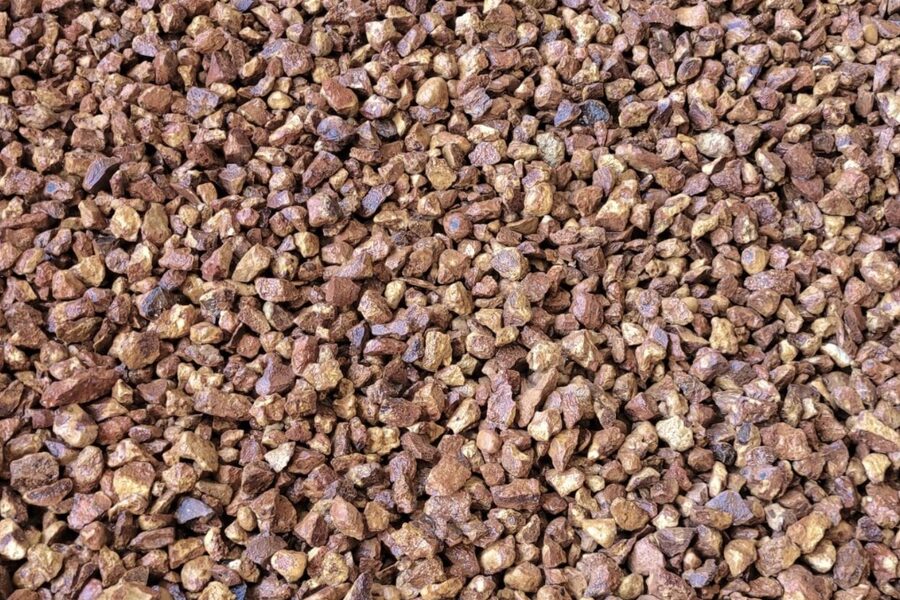
Cracked Pea Gravel
An angular, crushed red-brown gravel that locks together underfoot instead of rolling like traditional round pea gravel. Because it's crushed rather than naturally rounded, it packs down firmer and stays put on slopes and pathways — a big advantage on the sloped blocks common through the Perth Hills.
Pairs beautifully with native planting and works as a genuine mulch alternative: it won't break down, suppresses weeds once laid over geofabric, and lets water through to the soil.
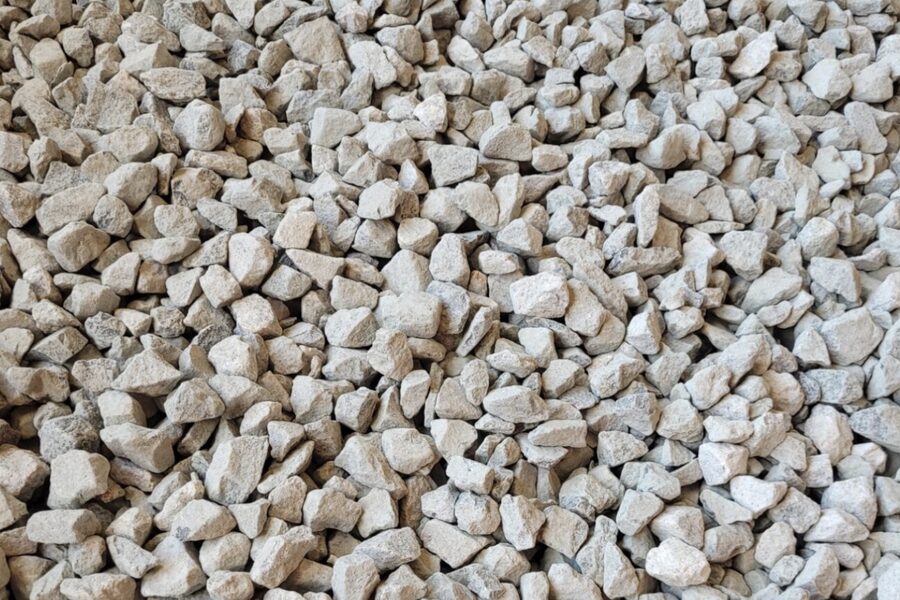
Blue Metal
A hard, angular crushed rock (basalt, dolerite, or granite depending on the quarry) ranging from blue-grey to charcoal. It's the workhorse of the gravel world — the smaller sizes handle drainage and pipe bedding, while 20mm is the go-to for driveways and behind retaining walls.
Also gives a clean, contemporary grey finish for homeowners after a modern look rather than an earthy one.
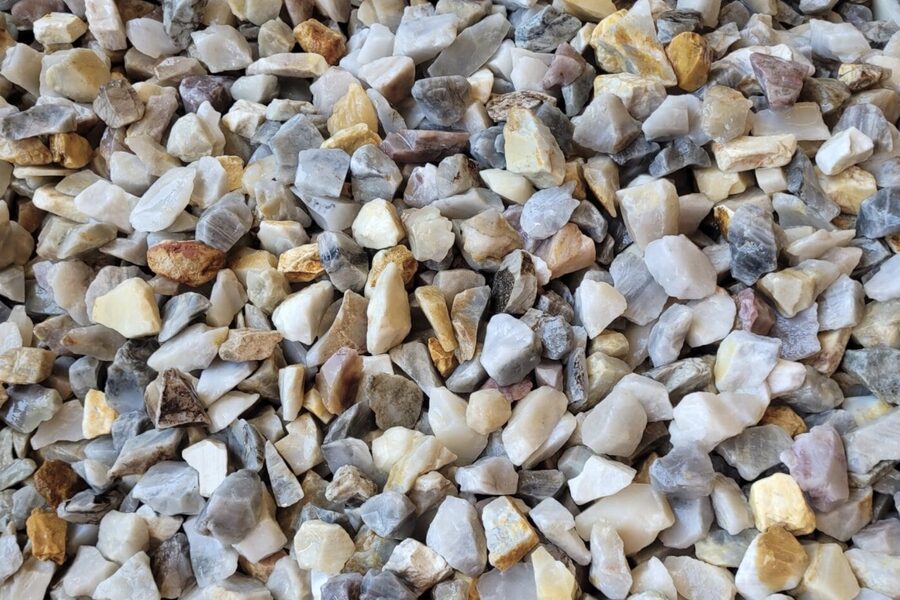
Rainbow Stone
A multi-coloured white quartz gravel that catches light beautifully in garden beds, around water features, and in exposed aggregate work. It's genuinely decorative rather than functional — this is the product we reach for when a client wants a feature bed to stand out.
Like cracked pea gravel, it should always go down over a weed mat so it stays clean and doesn't disappear into the sand underneath over time.
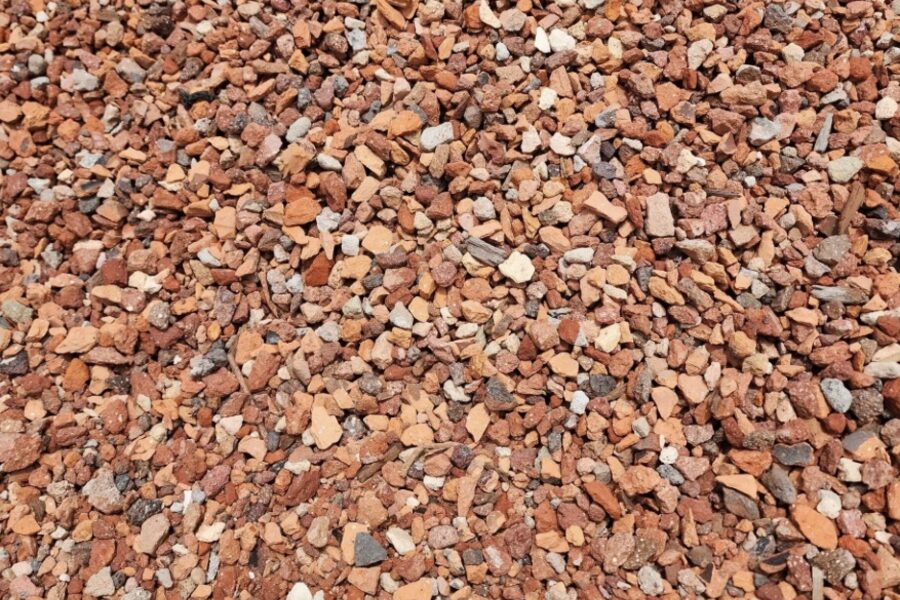
Crushed Brick
Recycled crushed brick gives a warm terracotta tone at a lower price point than natural stone. It works as a water-saving mulch layer or a rustic decorative finish, and its recycled origin appeals to clients after a lower-impact material.
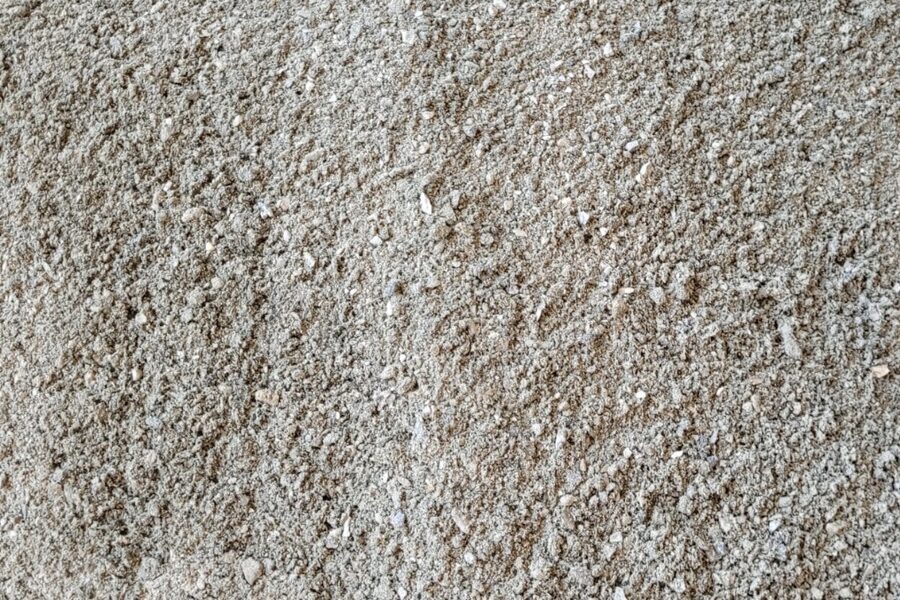
Crusher Dust (Blue Metal Dust)
The fine by-product of crushing blue metal, screened to under 2mm. It compacts hard and smooth, which makes it the standard base layer under artificial turf and paving — not a decorative topper in its own right, but essential prep work for a driveway or synthetic lawn that won't rut or shift.
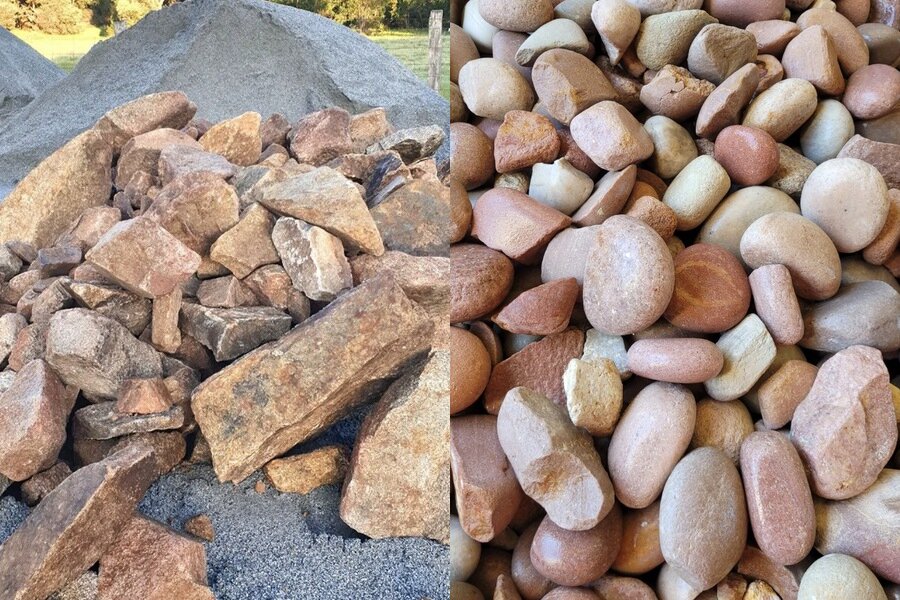
River Pebbles & Toodyay Stone
Smooth, rounded river stone brings a natural, softer look to borders and water features, while WA-quarried Toodyay stone is the classic choice for garden walls, paths, and feature boulders. Both are stone rather than gravel — priced and supplied differently, but often used alongside a gravel bed to anchor a design.